

We may be able to win this war – in Gaza, in Lebanon, and against Iran. But when we are surrounded by fundamentalist enemies that, like cancer cells, keep growing back, the promise of a “last war” is probably just wishful thinking.
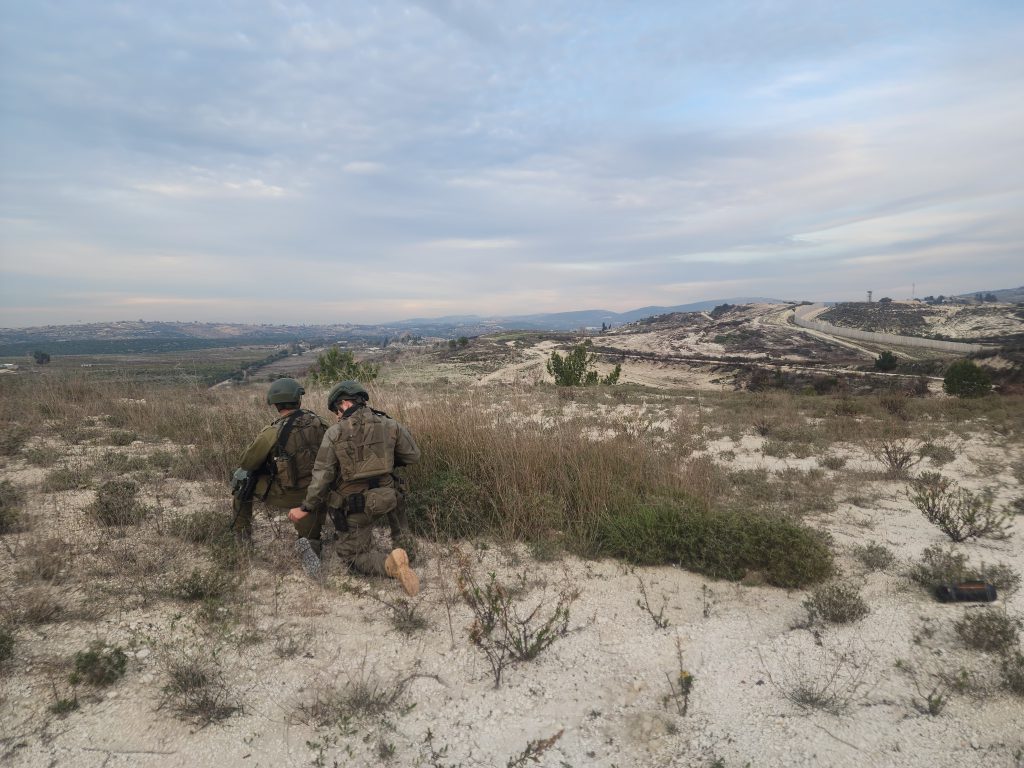
I was in the fourth grade when my father went off to fight in the First Lebanon War. A decade later, I fought in Lebanon. Now, my son is fighting in Lebanon. In every war or round of fighting, the military and political rhetoric promised, and continues to promise, “total victory” and decades of quiet. But the Middle Eastern reality is far more complex and volatile than that.
We may be able to win this war – in Gaza, in Lebanon, and against Iran. But when we are surrounded by fundamentalist enemies that, like cancer cells, keep growing back, the promise of a “last war” is probably just wishful thinking. The war we are fighting now, “Operation Roaring Lion,” pits Israel against an existential threat. Like every war forced upon us in recent years, this one too had to be fought, and this one too must be won.
Wars are hateful and terrible. After 78 years in which we have scarcely had time not to fight, we want peace and the possibility of living and maintaining a “normal life.” That is why, when we are forced to fight again, our collective heart’s desire is that this will be the last war. And that afterward Israel will know peace for at least 40 years. That is why words like “decisive,” “crushing,” or “total,” these modifiers of victory, have such a hold on us. It is easy to want to believe leaders who promise them. But the history of the Zionist enterprise, and of the State of Israel, teaches that there is no “end” – only longer or shorter respites.
Even the most optimistic scenario at present, the fall of the ayatollahs’ regime in Tehran, would probably not deliver Fukuyama’s “end of history” to this region. Although the demise of the “head of the octopus” would indeed dramatically improve the balance of power and dry up the sources of funding for the terrorist organizations around us, it would not eradicate the jihadist cancer, nor the deep-rooted hatred, nor the aspiration to destroy the State of Israel.
Moreover, the regional system is dynamic. New threats constantly take shape within the strategic vacuum. Turkey’s radicalization under Erdogan, or Egypt’s fragile stability – a country that maintains a cold peace with Israel while fielding a vast, modern army – remind us that today’s allies may become tomorrow’s challenges. For that reason, the present war and its achievements must not be regarded, whatever politicians may promise us, through the prism of the “last war” or of “total victory.”
We should strive to defeat the enemy on every front: in Lebanon, in Iran, and in Gaza. But even if the achievements amount to a dramatic weakening of the Iranian regime’s power and a further significant erosion of Hezbollah’s strength in Lebanon, leading to a regional shift, it would still be an achievement of great consequence.
This insight is painful, almost existentially despairing. No liberal, democratic society that sanctifies life and quality of life wants to raise its children knowing they will live forever by the sword. But it is even more dangerous, as we learned on October 7, to shut our eyes to this reality. Our survival here depends on our ability to look reality in the face, understand the threats, and stop lying to ourselves. We must work with all our might toward effective arrangements and political solutions that do not compromise our security, but we must also be ready to fight again, to guarantee our physical existence.
Political realism and an iron wall of national resilience, with a crushing military fist – these are the true foundations of Zionism’s continued existence. Only by recognizing that the determined and immediate destruction of every threat that rises against us is a permanent component of our existence will we be able to build a flourishing, strong, and cohesive society here.
As Moshe Dayan said in his graveside eulogy of Roi Rothberg in 1956: “We will make our reckoning with ourselves today. Let us not flinch from the hatred that accompanies and fills the lives of hundreds of thousands of Arabs, who are sitting and longing for the moment their hands can get our blood. We must not avert our gaze, lest our hands be weakened. That is our generation’s fate and our life’s choice – to be willing and armed, strong and unyielding, lest the sword be knocked from our fist and our lives cut down.
In 2026, those words are truer than ever.