



JPPI initiative argues that the scope of the investigation will determine whether Israel confronts the root causes of the October 7 failures.
The debate over establishing a state commission of inquiry into the October 7 failures has largely centered on personalities: who will appoint the members, who will chair the commission, and whether the government or the Supreme Court president will define the mandate.
A new civil initiative published this week seeks to shift that focus back to what its authors describe as the far more consequential question: what, exactly, should be investigated. The proposal, released by the Jewish People Policy Institute (JPPI), was formulated by former hostage Gadi Moses and attorney Gil Avriel, a former legal adviser to the National Security Council.
Moses, a farmer from Nir Oz who was abducted by Hamas on October 7 and later returned to Israel after 482 days in captivity, has since become a leading voice in the rehabilitation of his devastated kibbutz. Avriel brings years of experience to the initiative in the Prime Minister’s Office and in national security legal frameworks. What they offer is a systematic attempt to map the conceptual architecture of past Israeli commissions of inquiry – and to extract from them a professional template for the mandate of a future commission into October 7 and the war that followed.
The proposal is based on a comparative analysis of eight major security-related commissions established between 1973 and 2022. Among the security-related commissions were the Yom Kippur War Agranat Commission, the Kahan Commission into Sabra and Shatilla, the Shamgar commissions into the Cave of the Patriarchs massacre and the assassination of Yitzhak Rabin, the Or Commission into the October 2000 events, the Winograd Commission on the Second Lebanon War, and the Grunis Commission on the naval vessels and submarines affair.
The authors’ central argument is that the wording of a commission’s mandate shapes its ability to uncover root causes. Narrow or vaguely drafted mandates, they argue, have in the past constrained commissions to examine only proximate failures, leaving deeper structural and doctrinal flaws insufficiently addressed. Conversely, they argue, broader mandates that explicitly included decision-making processes, civil-military relations, and long-term policy questions were better positioned to produce systemic lessons.
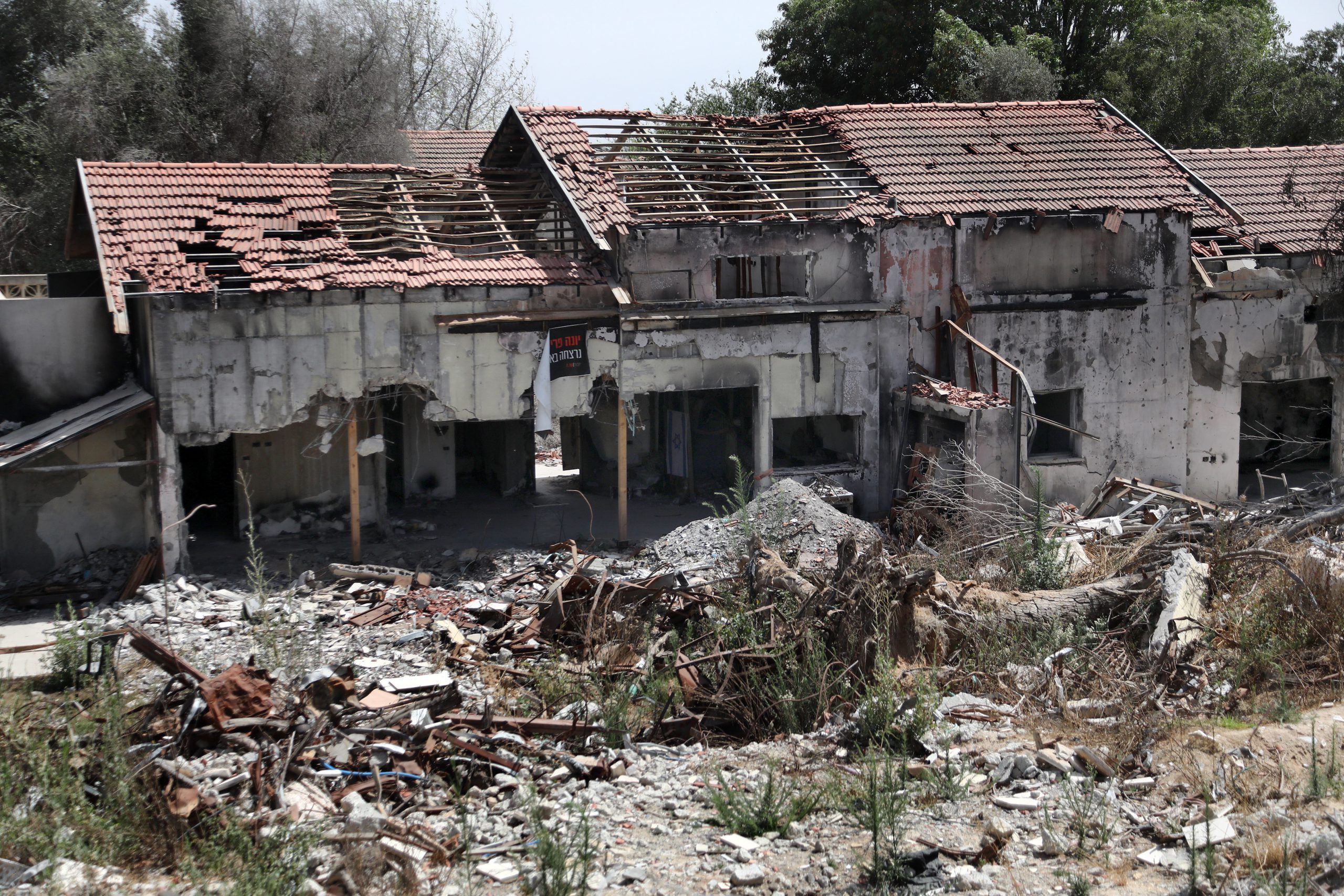
Drawing on that comparative review, the JPPI proposal suggests that a commission into October 7 must not confine itself to the day’s operational failures. It should, they write, be authorized to examine the full range of political, military-security, and economic-civilian decisions that shaped Israel’s posture toward Gaza in the years leading up to the attack, as well as the conduct of the war that followed. This includes the development and implementation of Israel’s security doctrine, force buildup, intelligence assessments, readiness levels, and the working relationships between the political leadership and the security establishment.
The proposed mandate explicitly references the need to investigate preparedness in the period preceding October 7, the functioning of state authorities during the attack and throughout the war, and the provision of civilian services, including evacuation and rehabilitation efforts in the South and the North. It also calls for scrutiny of Knesset oversight and the intelligence picture that was available prior to the attack.
Significantly, the initiative does not shy away from politically sensitive terrain, proposing instead that the commission examine decision-making regarding the return of living hostages and fallen captives held in Gaza, as well as the operation of Israel’s public diplomacy and communications systems amid what it describes as an intensifying international campaign of delegitimization. It further suggests that the commission assess the extent to which recommendations from previous commissions, military inquiries, and State Comptroller reports were implemented, and how failures of implementation may have contributed to the events under investigation.
One of the most contentious questions surrounding any October 7 commission is temporal scope: How far back should the investigation go? The proposal acknowledges the complexity of this issue. The deeper the historical dive, the more material there is and the longer the commission’s work is likely to take.
Based on its comparative review, the document recommends focusing primarily on the years 2018 to 2023, while allowing for background consideration of earlier developments, including the end of Israel’s presence in Gaza and prior rounds of fighting.
At the same time, it proposes that the commission also examine, for the period 2024-2025, two specific areas: the conduct of the political and security echelons regarding the hostages and the operation of public diplomacy mechanisms. In doing so, the authors attempt to strike a balance among justice, efficiency, and speed. The document also sets out structural recommendations: that the commission be established under the Commissions of Inquiry Law of 1968, that its chair and members be appointed by the president of the Supreme Court, that it be composed of five members, and that it be empowered to establish professional subcommittees on intelligence, security doctrine, and implementation of past recommendations.
It proposes a dedicated budget and staffing allocation commensurate with the “broad and exceptional” scope of the inquiry. In tone, the initiative is careful to avoid dictating political outcomes; it does not seek to replace the ongoing political debate over the commission’s composition. Rather, it frames itself as a professional contribution intended to ensure that, regardless of who appoints or chairs the body, its mandate will be sufficiently robust to uncover the truth.
The societal framing is explicit; a properly formulated mandate, the authors write, is a prerequisite for restoring public trust and for initiating a genuine process of healing and repair. The implication is that the crisis unleashed by October 7 is not only military or strategic, but also civic and psychological. The attack exposed not just intelligence and operational failures, but fractures in governance, oversight, and state-society relations.
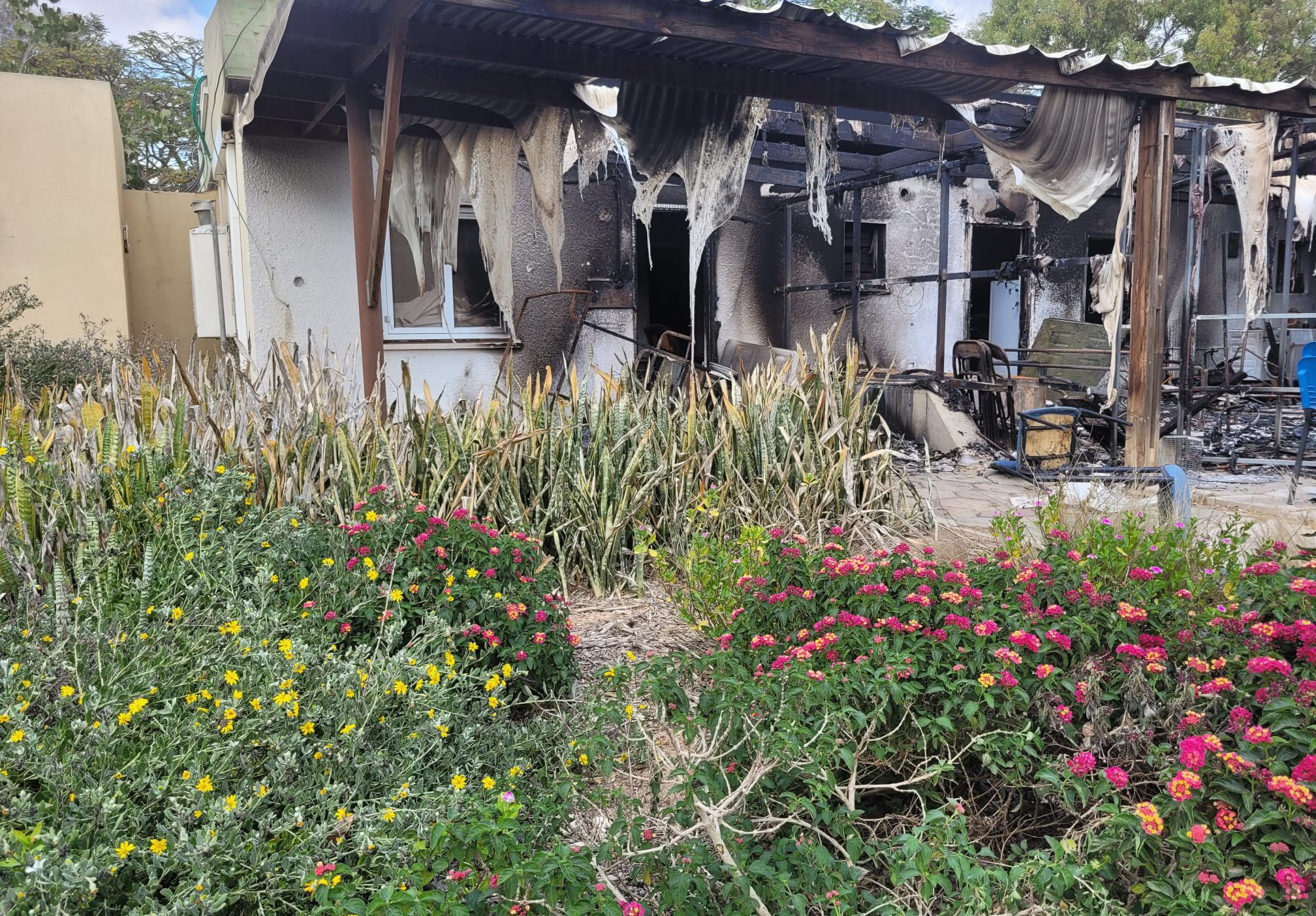
This argument resonates against a backdrop of nearly a year and a half of political paralysis over the issue. Calls for a state commission of inquiry have come from bereaved families, hostage relatives, opposition lawmakers, and segments of the security establishment. The government has thus far resisted establishing a full state commission, citing the ongoing war and the need to avoid politicization. Meanwhile, Attorney-General Gali Baharav-Miara has stated that a state commission is the appropriate legal mechanism to address failures of such national magnitude.
In that charged environment, the JPPI initiative attempts to re-anchor the conversation in institutional design rather than partisan blame. By returning to the mandates of past commissions – from Agranat’s examination of pre-war intelligence to Or’s scrutiny of state-minority relations – Moses and Avriel argue that the scope of inquiry will ultimately determine whether October 7 is treated as a singular collapse or as the culmination of long-term policy and structural trends.
For Moses, whose personal biography is inseparable from the trauma of the day, the effort carries an added moral dimension. A commission that looks only at tactical breakdowns, the initiative suggests, risks missing the deeper patterns that made such a breakdown possible.
A commission that is too narrow, too rushed, or too politically constrained may offer catharsis but not correction. “Those who do not investigate October 7,” the authors warn, “invite the next October 7.” The path to lessons learned, they argue, begins not with the identity of the commissioners, but with the clarity and courage of the mandate itself.