


Third Worldism was not, at its root, a movement of the Third World. It was a dream of the West, a mirror into which it peered and glimpsed both its sins and its fantasies of redemption.
There is no need to be offended by the term “Third Worldism.” It was not coined in Washington or Whitehall as a slight or slur. Nor in Africa. It was born, in fact, in the salons of Paris, among the very intellectuals who would become its most passionate apostles. The phrase “tiers monde” first appeared in the 1950s, drawn from the sociological musings of French demographer Alfred Sauvy, who compared the colonized peoples of Africa, Asia, and Latin America to the tiers état – the Third Estate of revolutionary France. As with the peasants of 1789, these new masses, too, were “ignored, exploited, despised,” and, he added with revolutionary flourish, “they too want to be something.” It was a noble coinage. But like many noble coinages, it was quickly distorted – less a reflection of reality than a projection of ideological need.
Third Worldism was not, at its root, a movement of the Third World. It was a dream of the West, a mirror into which it peered and glimpsed both its sins and its fantasies of redemption. It was the child of Western guilt, Western rebellion, and, above all, Western disillusionment with itself.
The mistaken salvation of Third Worldism
The 20th century was littered with the ruins of failed ideologies. Liberalism had collapsed under the weight of imperial hypocrisy. Communism had degenerated into Stalin’s gulag and Mao’s human waves. Even nationalism, once the sacred banner of European unification, had become stained by the blood of Verdun and Auschwitz. And so the disenchanted radicals of Paris, London, and New York turned their eyes away from their own soil, toward the deserts of Algeria, the jungles of Vietnam, and the townships of Soweto. There, they believed, the dream was alive.
Third Worldism offered a peculiar kind of salvation – not to the colonized but to the intellectual. For the Western radical, the figure of the guerrilla fighter came to replace the proletarian. The Kalashnikov replaced the hammer and sickle. Ho Chi Minh became the new Lenin; Che Guevara, the romantic martyr; Frantz Fanon, the prophet.
Fanon deserves particular scrutiny here – not because he was a fraud but because he was so tragically persuasive. A Martinican psychiatrist turned Algerian revolutionary, Fanon argued in his 1961 book The Wretched of the Earth that colonialism had so dehumanized the colonized that only violence could restore their sense of self. Violence, he insisted, was not only cathartic but necessary. It was the crucible through which a new man would be born. The colonizer, too, would be purified – not by apology but by the recoil of righteous fury.
It was a shocking thesis. Yet in the West, it was devoured. Jean-Paul Sartre, in his infamous preface to Fanon’s book, went even further, urging Europeans to shoot down a European to shed their colonial complicity. The embrace of Fanonism was not merely an act of solidarity – it was an ecstatic ritual of self-flagellation. One no longer needed to build just societies at home or confront the contradictions of one’s own freedom. One needed only to align with “the wretched of the Earth,” and the stains of empire would be washed away in the blood of anti-colonial rebellion.
This was not analysis. It was theology. And like most theologies, it required a devil. That devil, increasingly, was not the old European empires – many of which were already in retreat – but Zionism. Not because Fanon ever said so but because his predecessors, infused by the legacy of Soviet anti-Zionism, had done enough to paint Israel as the last colonial state, and hence the battlefield from which decolonization must unfold.
Beyond the Jewish state, another inversion took place: Liberal societies, however flawed, were condemned as inherently corrupt, while regimes and movements that murdered their own people were seen as bearers of authenticity and liberation. The Khmer Rouge emptied cities and executed intellectuals by the tens of thousands – but Western visitors returned from Phnom Penh whispering that something “pure” had taken root. Fidel Castro imprisoned dissidents, banned free press, and turned Havana into a police state – but his speeches were reprinted as gospel in radical journals from Berkeley to Berlin. Even Ayatollah Khomeini, who turned Iranian women into state property and purged his rivals with medieval zeal, was praised in French salons for his “anti-imperialist” credentials. Michel Foucault, the high priest of post-modernism, declared Khomeini’s revolution “the first great insurrection against global systems.” He had seen the future, and it came dressed in Islamist revolution.
What is remarkable is not only the total corruption of this view but its persistence. Even as many Third World revolutions collapsed into tyranny, even as anti-colonial leaders became kleptocrats and strongmen, the fantasy endured. It endured because it served a purpose. Third Worldism allowed Western radicals to maintain the illusion of revolutionary innocence. It gave them a cause without responsibility, passion without reflection.
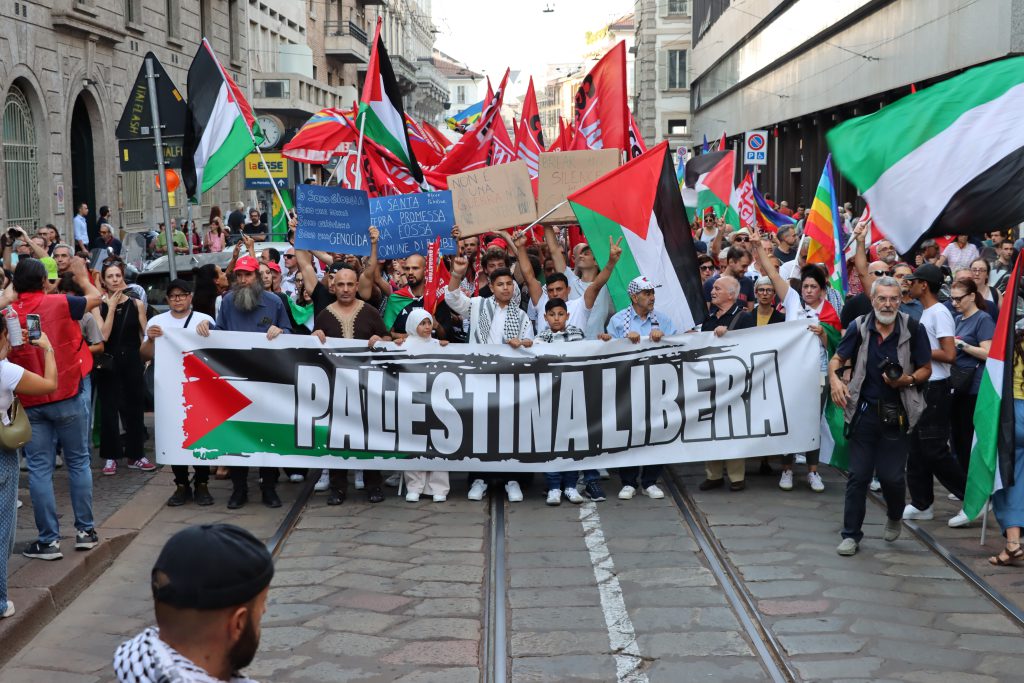
This ideology mutated over time. The Cold War may have ended, but the tropes remained. Today, they manifest in the ritual denunciations of Western “colonialism” at the United Nations, where regimes like China, Iran, and Russia lecture the world on human rights. They appear in the chants of student protesters who lionize Hamas, who wave the flag of “resistance” while shattering the windows of Jewish-owned businesses. It’s a curious thing – this solidarity with the oppressed that always seems to excuse the oppressor, provided he is anti-Western enough.
One might ask: What does any of this have to do with the Third World? In truth, very little. For many of the victims of these ideologies – the Cambodians under Pol Pot, the Sudanese under Bashir, the Iranians under Khomeini – Western solidarity never arrived. The radical dreamers of the West had already chosen their heroes. They preferred the revolution to the refugee, the slogan to the survivor.
In this way, Third Worldism betrayed the very people it claimed to defend. It replaced solidarity with spectacle. It turned human suffering into a theater for Western self-expression. It turned real struggles into parables for ideological redemption. And above all, it obscured the complexity of global politics with a moral schema so crude that it could classify democracies as oppressors and jihadists as liberators.
There is, of course, a kernel of truth in the Third Worldist critique. Western colonialism was a catastrophe. Exploitation, racism, and domination were real. But the solution to that tragedy cannot be the uncritical veneration of violence, nor the fetishization of foreign revolutions. We must recognize, too, the irony that the very societies most vilified by the Third Worldists – liberal democracies – are the only ones in which such criticism is even possible. Fanon was published in France. Guevara is a T-shirt in Manhattan. The chants of “Free Palestine” echo in the capitals of the very nations that have offered sanctuary to exiles from the Arab world’s failed revolutions.
Third Worldism was never really about the Third World. It was, and remains, a Western myth – a projection of lost ideals onto distant lands. Its legacy is not liberation but confusion. It replaced the hard task of self-examination with the easier task of self-loathing. It taught generations not to ask what is just or free or true, but only who is “oppressed” – and to trust that label, however ill-fitting, above all else.