
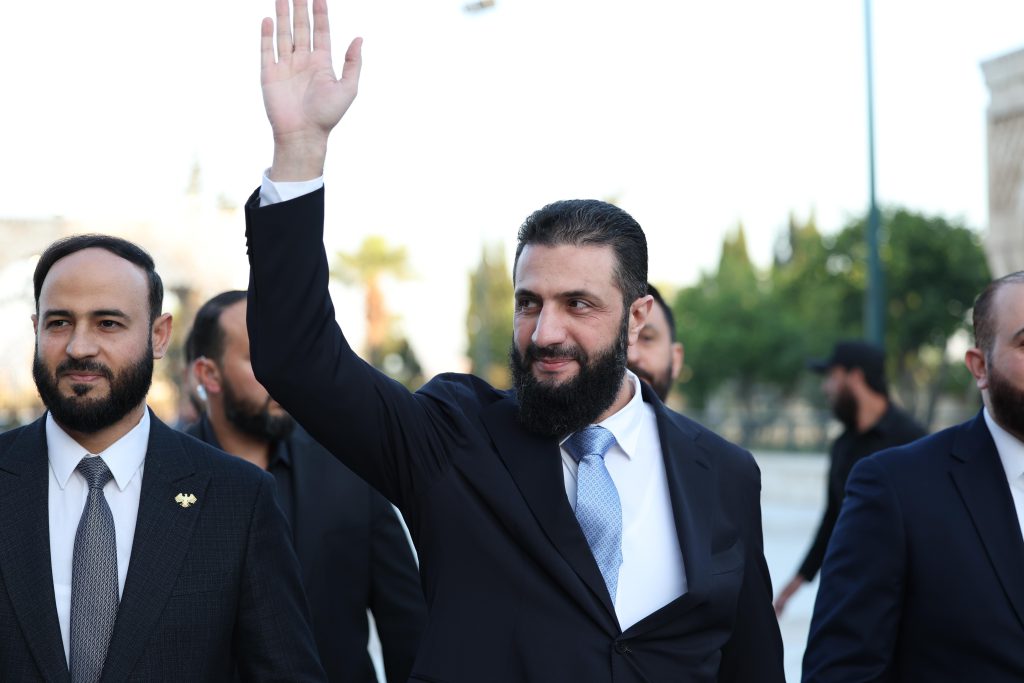


Al-Sharaa isn’t a friend, but his rise is a novel opportunity.
Israel has a unique opportunity in Syria. The December 2024 collapse of Bashar al-Assad’s regime sharply changed the regional orientation. Syria was suddenly no longer the lifeline of the Shiite axis on the northern front, through which Iranian weapons and money passed to Hezbollah. Instead, Damascus belongs to Ahmed al-Sharaa, a Sunni leader and former commander of al Qaeda’s Syrian affiliate, who had fought Hezbollah for years.
So far, Israel has treated Mr. al-Sharaa with skepticism. It responded to the Assad regime’s fall militarily, destroying Syrian capabilities and seizing a forward line in the Syrian Golan. Mr. al-Sharaa’s past raises legitimate questions about whether his political transformation from jihadist to suit-wearing rebuilder of Syria is genuine or tactical. Even if he is truly committed to restoring Syria and stabilizing relations with Israel, the country will remain fragile. Southern Syria is vulnerable to terrorist activity; such groups have operated near the Israeli border before. The regime’s relationship with Turkey is also troubling, while the unresolved dispute over the Golan Heights limits prospects for comprehensive peace.
Yet Israel appears to be missing a strategic window. Mr. al-Sharaa is no friend of Israel, but he is a clear enemy of Hezbollah. And while the previous Syrian government relied on Iran and Russia, Mr. al-Sharaa’s depends on Western and Gulf support, foreign investment and international acceptance. Damascus needs quiet on the Israeli front.
This overlap of interests seems to already be yielding results. According to Axios, the U.S. in July brokered an understanding involving Syria, Israel and the International Atomic Energy Agency to secure and remove nuclear material from a clandestine site linked to the Assad regime’s nuclear program. The episode demonstrated that where interests converge, Israel and the new Syrian government can address concrete security threats through U.S.-mediated, verifiable arrangements rather than confrontation.
Israel should exploit this overlap of interests in two areas: weakening the Shiite axis and preventing Sunni terrorist groups from establishing themselves in Syria. For the first time in years, there’s a government in Damascus that can sharply reduce the flow of weapons and money to Hezbollah. Israel should promote a U.S.-led security mechanism along the Syria-Lebanon border to impede Hezbollah’s rearmament—an essential part of any effort to weaken the group. Western forces including Israel could train and support designated Syrian and Lebanese units to target smuggling networks with the help of advanced monitoring systems. The U.S. would ensure that Syria and Lebanon make securing the border and disrupting smuggling a priority.
The two countries should also prevent Syria from serving global jihadist groups or Hamas. Israel can support reconstruction assistance conditioned on excluding Iranian forces, preventing terrorist infrastructure and ensuring that Syrian territory isn’t again used to threaten Israel.
Israel should stay cautious. Any Israeli redeployment from positions it seized after Mr. Assad’s fall should be gradual and tied to verifiable security conditions. Israel can also coordinate humanitarian aid through monitored international channels for border communities, helping stabilize one of Syria’s poorest areas and reduce local hostility to Israel.
A comprehensive peace treaty isn’t currently realistic. But Israel’s strategy need not run only through the barrel of a gun. In Mr. al-Sharaa’s Syria, an opportunity is emerging for limited cooperation against the Shiite axis, which could lay the groundwork for broader arrangements, foremost a security agreement in southern Syria. Israel should pursue the opportunity cautiously, following Reagan’s approach to Gorbachev: Trust but verify.