


Israel is the ‘bestie’ of the king of the world. For now. But that comes at a price, and the Jewish state must put itself first for the long-term.
Israel has stumbled into a dangerous gamble with historic consequences. Its relationship with the Trump administration, for better or worse, has become the beating heart of its national-security doctrine. A foreign leader, however friendly, is imposing his policy on Israel and making decisions, independently of us, that determine when the Israel Defense Forces may act and when they must hold back.
There is no way to dress this up: since US President Trump’s second election, some of Israel’s core national-security decisions are no longer being made solely by the Israeli government or the security cabinet. They are increasingly being shaped in conversations between the prime minister and the US president – and, judging by recent reports, often in accordance with the president’s demands.
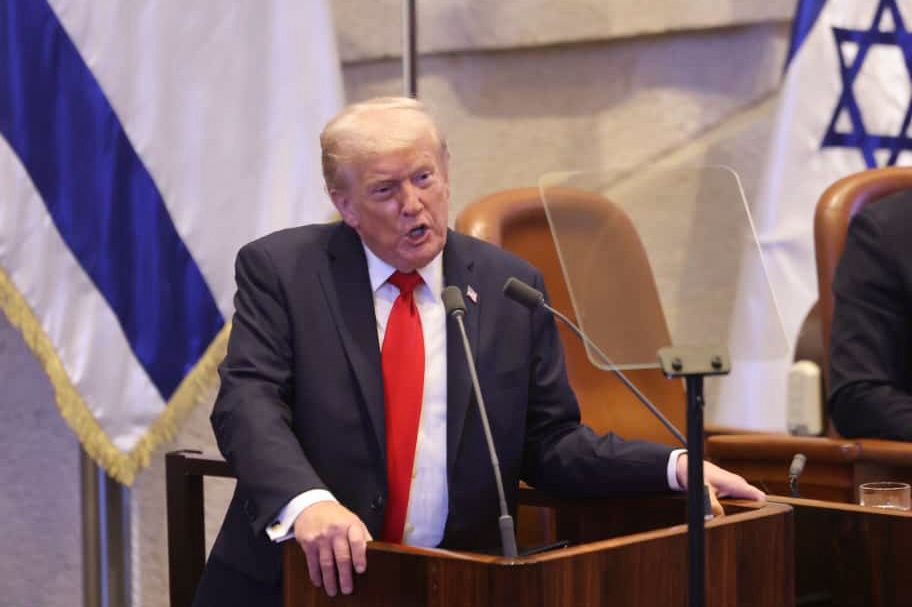
The reported exchange in which Trump allegedly berated Netanyahu over Israeli military actions – in the roughest, most candid of terms – is noteworthy not just because of its tone, but also because of what it suggests about the relationship itself. If such reports are accurate, they point to a reality in which Israeli strategic choices are being constrained not through formal alliance mechanisms but through the personal leverage of a foreign leader.
It is hard to overstate the enormous value of the enduring alliance with the United States: technological advantage, diplomatic backing, security assistance, international deterrence. Trump upgraded that alliance when the US military flew wing-to-wing with Israel in the war against our greatest enemy, over Iranian soil. We are the “bestie” of the king of the world. Lucky us.
But all this largesse, it is becoming clear, comes at a price. Israel is failing to translate the IDF’s extraordinary battlefield successes into decisive strategic outcomes. Iran is recovering from severe blows while preserving key capabilities. Hezbollah continues to exact a heavy price from our soldiers and has not allowed the north to return to normal. Hamas is reestablishing effective control over significant parts of Gaza.
These developments run counter to Israel’s security interests and erode deterrence. Yet Israel has accepted growing constraints on its freedom of action because Washington’s priorities have become an increasingly decisive factor in determining when and how force may be used.
Israel’s surrender – temporary? – rests on the assessment that the broader Israeli interest, especially in the campaign against Iran, requires this “flexibility” and that the benefits outweigh the costs. Really? In the immediate term, there is no telling how all these ongoing campaigns will end. The current situation is unsatisfactory. If it becomes entrenched over the long term – because of an agreement between Iran and the United States that the Gulf states embrace and that forces Israel to restrain itself – we may now be building our enemies’ launching pad for the next major war.
Our conduct toward the Trump administration at this moment may one day be seen, historically, as a shift from a partnership between states to a small country’s dependence on a global power. The difference is a matter of mindset, but its implications are critical: a sovereign state is not a protectorate.
The reported confrontation between Trump and Netanyahu is therefore troubling not merely as a diplomatic episode. It symbolizes a deeper shift. When a foreign leader can reportedly speak to Israel’s prime minister in such terms while simultaneously influencing Israel’s operational decisions, the relationship begins to resemble dependency more than partnership.
The same is true internally, in our own sense of ourselves. Consider Trump’s scandalous intervention in the criminal proceedings against the prime minister, which some on the extreme right greeted with applause. Or the hoisting of American flags everywhere on Israel’s Independence Day. A troubling change is taking shape in Israel’s understanding of its own independence.
The difficulty is exacerbated when we assess, without naiveté, the depth of the bond with the United States. Cultural changes in our country and theirs are undermining the closeness between the two societies and Israel is increasingly seen as a burden by broad swaths of the American public.
Will Israel’s security remain a central consideration in American foreign policy after the Trump era? Does the special relationship have an expiration date two and a half years from now? And if so, what must be done today?
A common answer is to make the most of the current window of opportunity. But such a strategy assumes a stable foundation. Trump is many things, but stable and predictable are not among them. His abrupt reversals, shifting priorities, and highly personalized style of decision-making make him an uncertain basis for a long-term Israeli security doctrine. Building strategy on such ground is like standing on a trampoline: it may lift you higher than expected, but it may also throw you off balance without warning.
The fear is not imaginary. It is not certain that Israel’s security is a central consideration for Trump. It is more reasonable to assume that he acts out of interests – some detractors would add, also personal ones – and those interests, by their nature, shift as events unfold.
Israel does have something to “sell” the United States and Trump: we are a sophisticated forward outpost of the West in the great zone of friction with the East, and we create real value for American security. But the balance of interests may change.
Trump’s top priority is the global competition with China. If he concludes that improving relations with key Muslim states better serves that objective than maintaining Israel’s current standing, there is no guarantee that Israeli interests will prevail. Israel remains valuable to the United States, but value is not the same as permanence. The Gulf states understand this and are working energetically to reshape the balance in their favor.
What is needed is a weaning process: a measured, calculated descent from the Trumpoline to more stable ground. Let me stress: I am not proposing that Israel shift its orientation from the United States to some other great-power alternative. No such alternative exists. But we must navigate our relations with “the world” in a much more informed manner, neither out of despair nor out of aggression.
We need a more balanced approach toward friendly countries in Europe and beyond, and we must rebuild our relationship with the American public across the political spectrum. American Jews, most of whom are not Trumpists, remain a critical bridge to the broader American consensus and to younger generations increasingly distant from Israel.
This requires two things. First, Israel must treat international legitimacy as a strategic asset and stop squandering it through undisciplined and inflammatory public messaging. Second, strategic planning must account not only for immediate military gains but also for the long-term diplomatic and political conditions that determine Israel’s freedom of action.
These are not alternatives to military strength. They are forms of risk diversification that responsible leadership must pursue before today’s dependence becomes tomorrow’s vulnerability.