The 250th Anniversary Edition
By: Prof. Gil Troy
To download the full guide, click here.
TRANSACTIONAL ANALYSIS OF AMERICA’S DIY AND ROI ALLY: HOW HAVE ISRAEL AND AMERICA BENEFITTED FROM THE U.S.-ISRAEL PARTNERSHIP?
In 2023, the U.S. supported 177 countries. Between January 2022 and June 2025, American spent $130.6 billion helping Ukraine, which some MAGA Republicans charge “puts America last.” During its long, futile Afghanistan effort, the U.S. invested over $141 billion in reconstruction efforts alone. Since the 2021 Taliban takeover, America added $3.83 billion in humanitarian and development aid. Brown University’s Cost of War project estimated that by 2021, America’s 20-year war on terror cost $8 trillion and 900,000 lives, mostly Iraqi and Afghani civilians. At least 7,053 U.S. soldiers died – four times as many have committed suicide.
Adding $1.8 billion for Ethiopia, $1.7 billion for Jordan, and $1.5 billion for Egypt – just in 2023 – Israel stands out. Israel is the rare DIY ally – a Defend It Yourself friend, defending itself, America, and the West with its own soldiers – while providing invaluable protection in the volatile Middle East. And with Israel’s aid barely a tenth of a percent of America’s budget – less than the government spends leasing unoccupied offices and Americans spend dressing their pets – Israel is the ROI ally, generating rich Returns on America’s Investment.
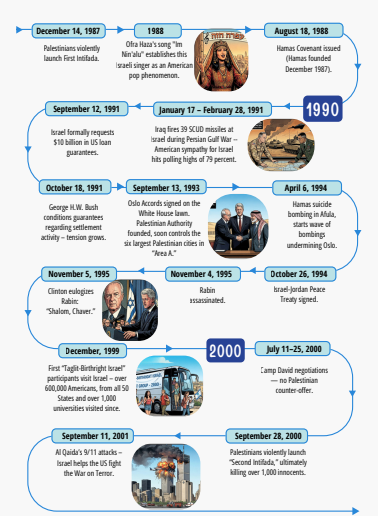
The friendship is mutual. This was most obvious after al-Qaeda’s September 11, 2001 murders. America turned to its smaller ally, which was too experienced in fighting terror. In 1996, President Bill Clinton and Prime Minister Shimon Peres signed a formal U.S.-Israel Counterterrorism Cooperation Accord. Clinton declared that “maintaining our resolve for peace does not mean turning the other cheek.” He explained: “The United States stands with Israel through good times and bad, because our countries share the same ideals – freedom, tolerance, democracy. We know that wherever those ideals are under siege in one country they are threatened everywhere.” Five short years later, Osama Bin Laden attacked those ideals.
American-Israeli consultations intensified, among diplomats, soldiers, intelligence analysts, and police officials, especially in New York. Israeli counterterrorism experts shared intelligence while advising Americans on behavior profiling, crowd protection strategies in public spaces, rapid response tactics following urban attacks, and pre-emptive disruptions. They proposed protective design features, including street barriers, helping Americans replicate Israel’s Rapid Intelligence Fusion centers, integrating military, police, and intelligence reports. Israeli aviation experts suggested passenger interviewing techniques and airplane security features, including reinforced cockpit doors.
Therefore, perhaps America’s greatest dividend from its Israel partnership is nothing – the safest, most boring post-9/11 nothing. It’s President George W. Bush’s great achievement too. Everyone was “sure” America would absorb more terrorist catastrophes. But none of the many subsequent attempts succeeded, as America crushed al-Qaida. How do you celebrate bells that didn’t ring?
In 2003, when America ended Saddam Hussein’s Iraqi dictatorship, Israel’s intelligence, experience, and tactical planning again saved American lives. Urban warfare specialists trained soldiers in Fort Bragg, North Carolina, and on Israeli bases, while Israeli military “consultants” visited Iraq secretly. As insurgents planted IEDs – improvised explosive devices – Israel developed vehicle-mounted microwave devices to jam terrorist communications frequencies. Although no panacea, receiving the Israeli-made Dragon Spike and Dragon Spike II anti-tank missiles at Yuma Proving Ground in Arizona, and retrofitting them, jumpstarted American counter-efforts.
In 2004, Ambassador J. Cofer Black, the State Department’s Coordinator for Counterterrorism, proclaimed: “the United States is standing shoulder to shoulder with many allies in a global coalition against terrorism, none more stalwart than the State of Israel.” Key “areas of cooperation” included “physical security, the detection and defeat of explosives, countermeasures against chemical, biological, radiological and nuclear threats, and investigative support and forensics technologies.” Black concluded: “We have succeeded in jointly developing new technologies which have saved American and Israeli lives over the years.”
DIVIDENDS FROM ISRAEL’S POST-OCTOBER 7TH WAR
Under the 2018 MOU – Memo of Understanding – negotiated during Barack Obama’s presidency, Israel receives $3.3 billion in American aid annually via the Foreign Military Financing (FMF) program, and $500 million for cooperative missile defense programs. It’s another win-win. American companies and workers benefit because Israel must spend most of the aid on American-produced hardware and services.
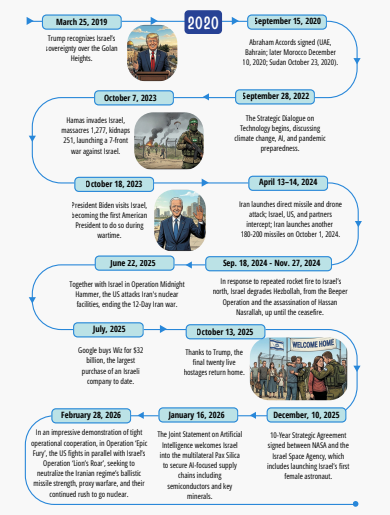
By June 2025, America had shipped over 900,000 tons of military equipment, via 800 flights and 140 maritime shipments since October 2023. American aid since 1948 now exceeds $130 billion. Still, following Joe Biden’s pressure on Benjamin Netanyahu to restrain the IDF, many Israelis fear Israel’s over-dependence on America. Biden told Israel to “take the win” after Iran’s April 13, 2024, barrage and not eviscerate “Iran’s air defenses.” In September, Secretary of Defense Lloyd Austin reportedly shouted at Defense Minister Yoav Gallant for only giving America last-minute notice of Hassan Nasrallah’s assassination. The Jerusalem Post reported: “The U.S. has urged Israel multiple times to act less aggressively or to avoid taking certain actions against Hezbollah to prevent… a regional war.”
Israelis should thank Biden and his team for supplying Israel so generously. But Biden also kept constraining Israel, saying, for example, in May 2024: “I made it clear that if they go into Rafah… I’m not supplying the weapons that have been used historically to deal with Rafah” – meaning 2,000-pound bombs and D-9 bulldozers.
Simultaneously, America’s growing “neo-isolationists” wondered what America gets in return for its investment – besides debt, Arab enmity, and risks of “forever wars.” When Gulf States rulers welcomed President Trump in mid-May 2025, with $4 trillion in investments, business deals for his family, and a 747 jet, Israel seemed to be on the losing side of this “transactional” approach to foreign policy. Stunningly, few Jewish or Israeli leaders responded by trumpeting Israel’s many paybacks to America. Ignoring them is political malpractice.
Usually, allying with a superpower is like trusting your older brother – the big guy fights the little guy’s battles. Israel, however, has always been America’s DIY ally, requesting arms, not bodies. Until the final day of its 12-Day war with Iran, Israel always fought alone – but President Trump recognized Iran’s lethal threat to America – “Great Satan” – and the West too.
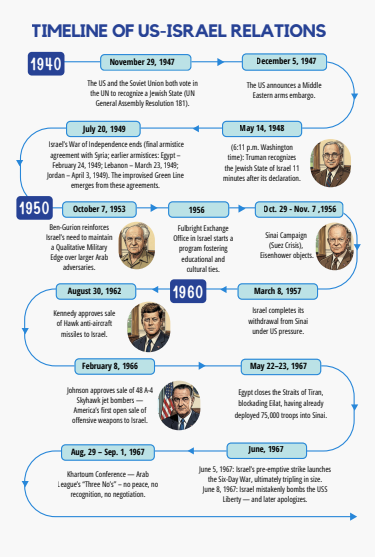
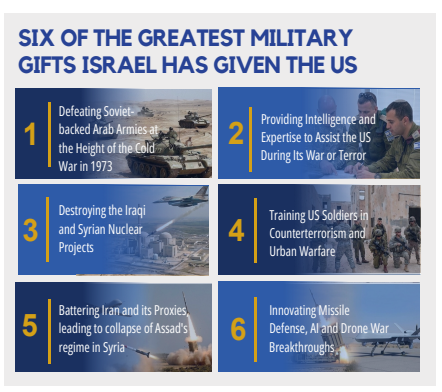
For decades, Israel strengthened America by defending itself. Israel’s 1967 and 1973 victories humiliated America’s Cold War rival, the Soviet Union. Going beyond the Vietnam-era morale boost, intelligence bonanza, and diplomatic gains, West Point’s John Spencer reports that America’s Department of Defense commissioned 37 studies evaluating the 1973 War. “Israel’s battlefield successes” transformed “U.S. military doctrine, directly influencing the development of AirLand Battle doctrine and the ‘Big Five’ weapon systems – Apache helicopters, Bradley Fighting Vehicles, Patriot missile systems, Abrams tanks, and Black Hawk helicopters. These advancements, combined with new operational approaches emphasizing speed, firepower, and joint-force coordination, would redefine modern warfare.”
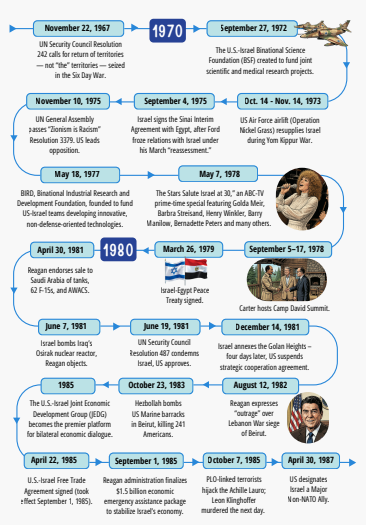
Then, in 1981, despite the Reagan Administration’s initial fury, Israel’s destruction of Iraq’s nuclear plant proved game changing. No other ally has done more to limit nuclear expansion. In 1991, after the Gulf War, America’s Defense Secretary Dick Cheney sent David Ivry, who had commanded Israel’s Air Force in 1981, a satellite photo detailing Osirak’s destruction. Cheney signed it, “With thanks and appreciation for the outstanding job you did on the Iraqi nuclear program in 1981, which made our job much easier in Desert Storm!”
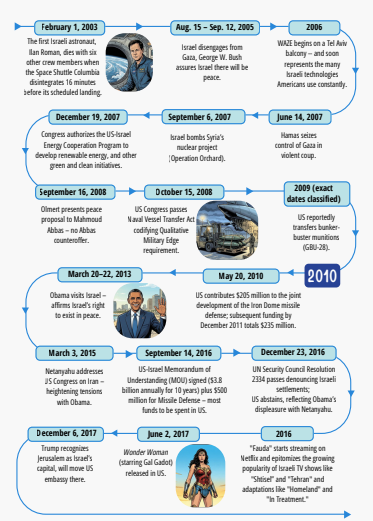
In 2007, Vice President Dick Cheney urged President George W. Bush to bomb Syria’s North Korean-built nuclear plant, recalling, “There was no doubt that the building in Syria had been built exactly like the one in North Korea, which was used to produce plutonium for nuclear bombs Pyongyang built for itself.” When Bush refused, Israel bombed the plant. “I’m glad that’s what they did,” Cheney exulted.
Initially, the Middle East was another Cold War theater, a secondary region where Israel checked Soviet ambitions. After the Soviet Union’s 1991 collapse, Middle East madness menaced America directly. Threats ranged from the Iraqi, Syrian, and Iranian nuclear projects, to the direct horrors and devastation al-Qaida brought to America on September 11, 2001.
With Jihadi terrorism spreading, America needed Israel’s occasionally aggressive, often proactive, and almost always autonomous defense posture. While benefiting from Israel’s intelligence sharing, training exercises, tactical improvisations, and strategic brainstorming, many Israeli and American soldiers bonded too.
Moreover, from al-Qaida to ISIS, from Hezbollah to Hamas, the Islamists hated the West, and America, not just “the Jews.” Israel keeps hitting America’s enemies, hard. Israel’s 2024 killing of Hassan Nasrallah – and many Hezbollah terrorists – belatedly avenged Hezbollah’s Beirut barracks bombing that murdered 241 Americans in 1983.
Iran also has American blood on its hands. Iran-backed militants killed 608 Americans during the Iraq war, one in every six American combatant fatalities. Iran-backed terrorists murdered three American diplomats visiting Gaza in 2003, while Iran paid bounties to Taliban fighters who killed American soldiers in Afghanistan.
Israeli and American intelligence exchanges keep saving lives. Countless passengers flew safely in 2017 following Israeli warnings that Syrian jihadists were masquerading bombs as laptop batteries. Israeli tips in 2020 and 2021 sent over 1,500 American soldiers into shelters before Iran unleashed missile barrages.
Also facing jihadists who hide behind civilians, America has learned from the IDF how to advance militarily while minimizing civilian harm. Innovations include pinpoint precision targeting, advance warnings, humanitarian corridors, and “roof knocking,” firing small, non-lethal weapons onto rooftops, to warn residents to flee. Such shots sacrifice the element of surprise to save lives. In 2016, the U.S. military knocked roofs in Mosul, Iraq against ISIS.
In the difficult, bloody post-October 7th Gaza conflict, Israel taught the world how to use AI to target terrorists. AI programs estimate from cell-phone usage how many
civilians may be home alongside a terrorist relative, sometimes leading to aborted missions in the final seconds. Pathbreaking big data analysis processed millions of pieces of evidence. “Lavender” tracked Hamas targets, while “The Gospel” identified military infrastructure concealed in civilian buildings. Facial recognition software, “Blue Wolf” and “Red Wolf,” helped Gazans move along more quickly, as computers detected terrorists hiding among them.
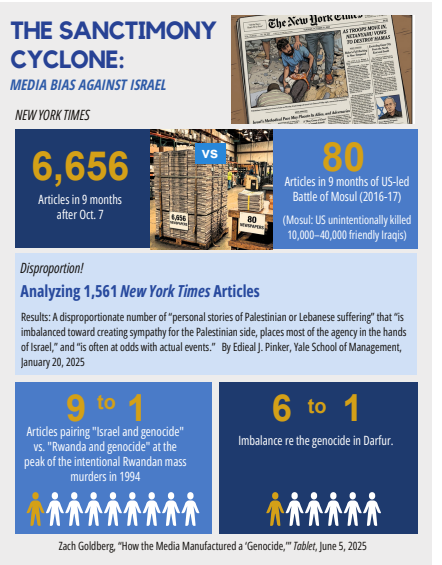
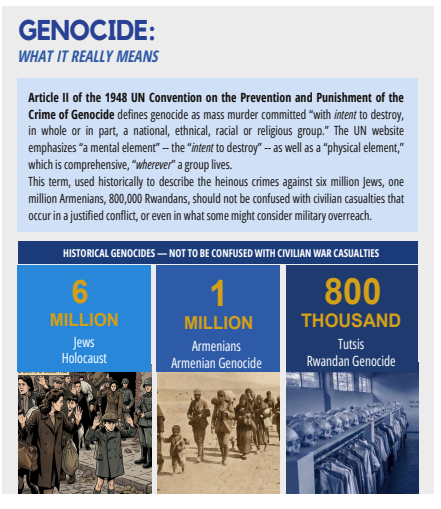
Morally, the IDF set standards America’s army – and all democratic militaries – will study for years. True, Israel has been pummeled worldwide for its “disproportionate assault” on Gaza. But America’s coalition destroyed more in Iraq and Afghanistan. The narrative, however, differed. The New York Times ran 6,656 articles about Gaza in the nine months after October 7 – and only 80 articles about America’s nine-month assault to free Mosul’s pro-Western citizens from ISIS jihadis. Edieal Pinker from the Yale School of Management found that 1,561 New York Times articles disproportionately emphasized “personal stories of Palestinian or Lebanese suffering… creating sympathy for the Palestinian side,” while placing “most of the agency in the hands of Israel,” which “often” contradicts “actual events.” Florida State University’s Zach Goldberg noted in Tablet that “articles pairing Israel and genocide reached levels more than nine times higher than the peak for Rwanda and nearly six times greater than for Darfur” – where actual, intentional, mass genocides occurred.
Anti-Zionists have little credibility: they accused Israel of “genocide” long before October 7.
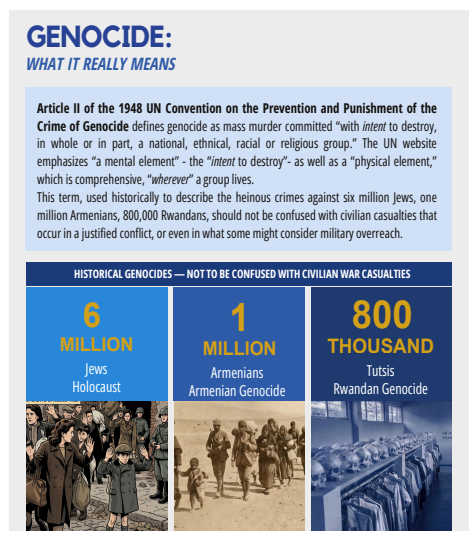
And genocide is not a catchall for “civilian deaths” or “wars I condemn.” The UN website, quoting the 1948 Convention on the Prevention and Punishment of the Crime of Genocide, emphasizes “a mental element,” the “intent to destroy,” as well as a comprehensive “physical element” — “wherever” a group lives. In 900 days following October 7, Israel provided 2,174,489 tons of aid – 13,209 pallets via 111,540 trucks. Israel didn’t target Gazans outside the conflict zone, while often constraining its own self-defense efforts. Such efforts distinguish the Gaza war tragedy from genocide.
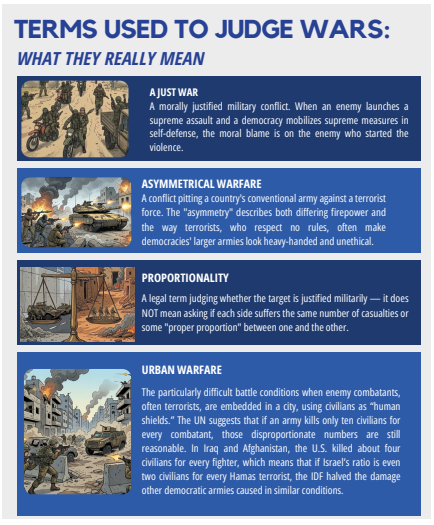
War is hell. Urban warfare is particularly hellish for civilians. “While there is no denying that civilians are dying because of the IDF’s actions, the routine Hamas tactic of walking the streets in civilian clothes with no weapons, then duck[ing] into a building knowing where weapons are stored for use against the IDF, makes urban structures legitimate military targets according to the laws of armed conflict,” wrote David A. Deptula, a retired American Air Force Lieutenant General. “The military activities I saw…,” he wrote, after visiting Gaza in 2024, “are indicative of the IDF complying with the laws of armed conflict.”
West Point’s urban warfare expert, Col. John Spencer, noting how Israel distributed military maps to civilians for the first time in history, made 70,000 direct phone calls, dropped 7 million leaflets, and sent 13 million text messages, and 15 million pre-recorded voicemails, concluded: “Israel has followed the laws of war, legal obligations, best
practices in civilian harm mitigation, and still found a way to reduce civilian casualties to historically low levels.” The UN estimates that in urban warfare, nine civilians often die for every one combatant. Even accepting Hamas’s exaggerated numbers, which include all natural deaths, Israel’s approximate ratio of one-to-two civilians for every terrorist killed, while heartbreaking, is groundbreaking too.
Perhaps the best symbol of the trust integrating Israel and America militarily is how Americans operate out of an Israeli base in the Negev, “Site 512,” for shared intelligence and defense purposes.
Americans don’t feel compelled to build an independent base. Equally important are the many U.S.-Israel collaborations redefining modern warfare, from the David’s Sling missile defense system, first used to defend Israel in 2018, the Arrow 3 air defense system Boeing and Israel developed jointly, and the bilateral military exercises, which Israelis and Americans acknowledge have “tremendous strategic significance.”
Since 2001, American and Israeli forces have alternated between the massive, sophisticated, high stakes Juniper Cobra and Juniper Falcon drills. Juniper Cobra anticipated the kind of large-scale ballistic missile attacks Israel absorbed from Iran. Juniper Falcon emphasizes logistics, command-and-control structures, and rapid deployment in case a massive invasion of Israel threatens America too. “Interoperability is a big part of long-term success for our two countries, and the more we work together and practice our combined mission, the more effective we are going to be…” explains Lt. Col. Nicholas Welly of the U.S. Central Command – CENTCOM.
In January 2023, Israelis and Americans ran Juniper Oak 2023.2. CENTCOM called it “the largest ever U.S.-Israel combined” live-fire exercise. Integrating land, air, sea, space, and cyber forces, 6,400 Americans trained with over 1500 Israelis. Americans left reassured they could defend themselves in the Middle East, if necessary, “while maintaining commitments in other priority theaters,” one analysis concluded. The Pentagon affirmed that this exercise demonstrated “that the U.S. commitment to Israel’s security is ironclad and enduring.”
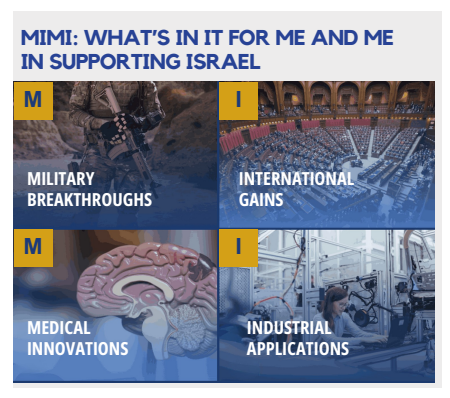
No matter what the politics, the military relationship keeps deepening. Since October 7, many of Israel’s war-time contributions to America can be summarized in four major categories. These go beyond the dividends “Start Up Nation” usually bestows on humanity. In the acronymous spirit of the Pentagon, the land of the MRE, Meal, Ready-to-eat, and of the NCO, Non-Commissioned Officer, consider the acronym MIMI (as in what’s in it for Me and Me?): Military and Intelligence breakthroughs; International gains; Medical innovations; Industrial applications.
MILITARY AND INTELLIGENCE BREAKTHROUGHS
Israel encountered unprecedented battlefield challenges in a seven-front war. Hezbollah bombed from Lebanon. Palestinian terrorists attacked inside Israel and the disputed territories. Assad’s Syria offered Iranian-backed militias launching pads and weapons-smuggling routes. Iranian-backed militias bombarded from Iraq. Houthis in Yemen attacked Israel and international shipping. Iran bankrolled and choreographed the “Ring of Fire,” while launching its own ballistic missiles. And in Gaza, Israel faced 400 miles of terror tunnels, with hostile civilians often housing the 251 innocent hostages.
Hamas and Islamic Jihad also used two million Gazans as human shields. “In the study of war,” Professor Ruth Wisse writes, “I find no precedent for an aggressor who booby-trapped his own civilian population to provoke the response that could then be blamed on the invaders. Germany did not plan to have Dresden bombed nor did Japan invite the blasting of Hiroshima so that they could then accuse the Allies of war crimes.”
Nevertheless, Israel succeeded – without losing thousands of soldiers as American experts predicted.
American and NATO troops are already adopting Israeli innovations. Western troops must anticipate urban warfare, drone warfare, and four-dimensional fighting on land, sea, tunnels, and online, while, like the IDF, fighting within every democratic army’s ethical limits.
Battlefield breakthroughs include:
INTERNATIONAL GAINS
Another hard-to-prove triumph: imagine how emboldened jihadists, Russia, and China would have felt had Israel responded weakly or collapsed. While difficult to quantify, Israel’s assertive response avoided that diplomatic disaster for America, the West, and the world.
As noted, Joe Biden’s bold post-October 7 gamble on Israel paid off with Hamas, Hezbollah, and Iran degraded militarily and diplomatically, as Assad’s Russian-backed Syrian regime collapsed. Israel’s blows strengthened America and weakened Russia and China. Israel’s effective counterattack demoralized jihadists globally. Perhaps most important, by exposing the Tehran regime as dangerous, weak, and bent on going nuclear, while emboldening the heroic January 2026 street protesters, little Israel has done America and the world “monumental” favors, using a favorite Trumpian adjective — even if the “mullahocracy” survives. As the war against Iran unfolded, it became clear how essential Iranian oil was for China, and how much an American-Israeli victory could deter China too.
MEDICAL INNOVATIONS
Since 2002, many American, Canadian, French, and Belgian soldiers carry “the Izzy,” “the Israel bandage.” The bandage has become, journalists explain, “one of the most common bleeding control devices in tactical and emergency medicine around the world.” An Israeli combat medic in the 1990s, Bernard Bar-Natan, noted that the bandages in his medical bag dated to the 1930s. His modernized bandage is elastic, incorporating a non-
adhesive pad to avoid sticking to wounds. Its built-in pressure applicator and locking mechanism keep pressure on the wound – even over awkward body parts.
The horrors of October 7, and subsequently, popularized another Israeli innovation which will soon save millions of Americans. NexoBrid gel, recently approved by the FDA, is a pineapple-based burn treatment that solved a longstanding problem. Researchers knew that enzymes extracted from pineapple stems could dissolve dead skin, enabling doctors to treat wounds directly. But the enzyme evaporates too quickly. The Israeli company MediWound dehydrated the enzymes. Now, a liquid activates the gel only for treatment.
At Sheba Medical Center in Tel Hashomer alone, 85 start-ups responded to a post-October 7th call for innovation. The Kemtai personal trainer app was repurposed to assess patients’ movements with AI to diagnose rehabilitation needs, freeing physiotherapists to treat patients. “Every technology that we talk about is not just valuable for war injuries, but has long-term civilian applications,” says Avner Halperin, CEO of Sheba Impact.
Such breakthroughs speeded the time spent evacuating wounded soldiers, improved combat medics’ skills, and halved Israel’s death rate among those injured in the Second Lebanon War, to today’s 6.7 percent rate. With so many more wounded soldiers surviving, Israel improved rehabilitation methods and post-trauma treatment. The New York Post marveled in December 2024: “From surgical robots that remove bullets and shrapnel to 3D-printed prosthetics tailored for rapid deployment… these technologies are redefining modern medicine and saving lives.”
AI perfected triage – essential following mass casualty events. Advanced programs identify who needs the most help and where they can get treated, while creating a uniform medical record following each wounded soldier.
INDUSTRIAL APPLICATIONS
Americans fell in love with Israel – and America started supporting Israel – when Israel had a crude, heavily-centralized economy, run by socialists who at least respected private property and civil liberties. Today, 88 Israeli-founded companies are worth more than $1 billion. Sixty leading American companies from Microsoft to Meta established Israeli research and development (R&D) centers. Every minute, every day, Americans use Israeli innovations in their phones, homes, cars, and offices.
Others have detailed Start-Up Nation’s contributions globally. Still, Israeli innovation and Defense Ministry boldness rushed many inventions into action since October 7. They’re now being adapted for civilian use. The ministry’s “green path” for war-accelerated inventions has fast-tracked more than 100 start-ups in the last two years.
Robotican’s “Angry Birds” drone-versus-drone system will enhance security in civilian airspace, especially as more drones crowd the skies. AI-driven drones that navigated Hamas and Hezbollah terror tunnels can facilitate mining, rescue operations, and infrastructure maintenance of sewers and subways.
Xtend’s AI-driven indoor drones serve mundane functions like warehousing and inventory control, as well as security monitoring and search-and-rescue in large buildings.
“The Gospel” AI target-generation system can apply its pattern recognition and data fusion for risk assessment, threat detection, and fraud protection.
Thirdeye’s Chimera system uses heat-signature thermal technology and advanced imaging systems that can manufacture robotics and self-driving vehicles, while offering birds-eye views of anything from agriculture to airports, through clouds or rain.
Clearly, Israel is the bold DIY ally and the ROI ally too, offering America impressive Returns on Investment. That’s why Israel passes the four presidential tests:
Every president vows to “preserve, protect, and defend” the Constitution – and, by extension, the American people. Few allies have done more to “preserve, protect, and defend” the American people than Israel. That’s why America’s 2026 National Defense Strategy calls Israel “a model ally,” which, when enabled “to defend itself,” can “promote our shared interests.”
For decades, most Americans instinctively understood that payoff. No matter how Israel fared in the media, or internationally, 70 percent of Americans kept supporting Israel. Then came October 7, with the surge in anti-Zionist antisemitism, slanted media coverage accusing Israel of brutality, an orchestrated campaign against Israel online, and the rise of Jew-haters and Israel-bashers, Left and Right, committed to making Israel – and its supporters – radioactive.
Since October 7 – actually, since its establishment – Israel has faced a series of unhappy choices when defending itself against genocidal enemies. Democracies can benefit from robust debate and thoughtful critique. But some criticisms are so extreme, unfair, and obsessive that they indict the accuser more than the accused.
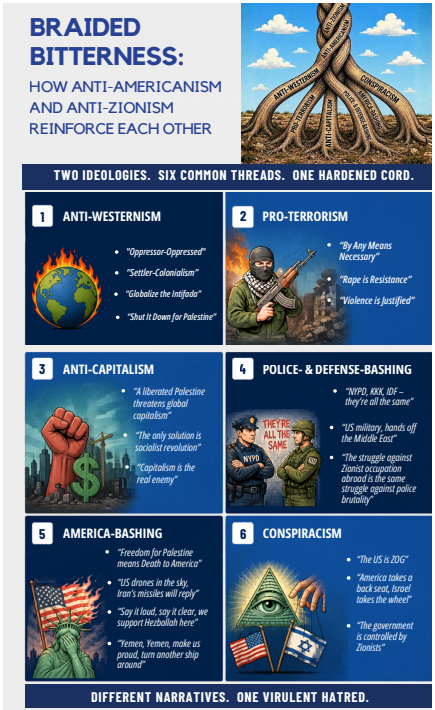
BRAIDED BITTERNESS: ANTI-SEMITISM, ANTI-ZIONISM, AND ANTI-AMERICANISM INTERTWINED
Antisemitism reflects an obsession defining the Jew, the Jewish people, or the Jewish state as uniquely evil and threatening. Anti-Zionism focuses that obsessive hatred on Israel and Zionism. The far left accuses Israel of “genocide,” claiming supporting Israel risks America’s soul. The far right accuses “the Jews” of “putting Israel first,” claiming supporting Israel risks America’s soldiers and bankbook. Both take their bigotry out on individual Jews. Meanwhile, America’s “silenced majority” fears being tagged or doesn’t follow the issue carefully enough, allowing the zealots to shape the broader conversation.
As anti-Zionists burn American and Israeli flags together, splash red paint on the White House gates, deface monuments, block Christmas-time traffic, and graffiti universities,
congressional offices, and synagogues, while cheering Iran on, the ideological affinities become clear. Just as Americanism, liberalism, and Zionism rhyme much more than they clash, anti-Americanism, anti-Semitism and anti-Zionism overlap. It’s a braided bitterness. Six intertwined ideological threads reinforce one another:
Many analysts consider anti-Semitism an elaborate conspiracy theory, placing the Jew at the center of whatever the haters hate. Today, the Jewish state of ten million people often is their focal point – casting a continental superpower, 350 million strong, as Israel’s dupe – or co-conspirator.
Critics often accuse Jews of defensively clumping anti-Semitism, anti-Zionism, and anti-Americanism together. Yet in the age of intersectionality, radicals hunting down “systemic” sins, connect the dots. “If you grow up in the United States, you are naturally socialized to obscure settler-colonialism in a settler-colony… you’re just socialized to be a capitalist, and to be a racist, to be a settler, and then – to be a Zionist,” Noura Erakat, Professor of Africana Studies at Rutgers University, claims. Similarly, in 2023 Zohran Mamdani conflated his enemies, insisting: “We have to make it clear that when the boot of the NYPD is on your neck, it’s been laced by the IDF.”
Patriots love their countries because of its politicians sometimes, and despite its politics always. Like all countries, Israel has good and bad politicians, good and bad policies. The liberal media has so demonized Prime Minister Benjamin Netanyahu, who indeed has coalition allies contemptuous of liberal values, that some Jews feel disaffected with Israel’s government – and, increasingly, the Jewish state. Hopping on the bandwagon driven by anti-Zionist zealots and media bias, many Americans who didn’t leave America despite hating either Biden or Trump, abandon the people of Israel because they despise its government. By contrast, in Israel, many Netanyahu’s critics fought courageously alongside many Netanyahu loyalists to save their country together.
The Second Iran War quickly became a referendum on Trump in America. His opponents opposed the war, most supporters cheered. In Israel, support for the war transcended partisanship. Most Israelis recognized the Iranian threat as existential not political – while scurrying to bomb shelters.
ADDRESSING ISOLATIONISTS, PROGRESSIVES, AND IRAN WAR CRITICS
Amid this cyclone singling out Israel for disproportionate criticism and holding it to standards wartime democracies rarely meet, it’s tempting to demonize all critics. Some right-wing isolationists hate Israel because they support Nazism and white nationalism. And left-wing anti-Zionists burying Palestinian racism, sexism, homophobia, illiberality, and terrorism are guilty of the antisemite’s triple double-cross: they betray the Jews, liberalism, and themselves.
This minority of anti-Zionist fanatics, for whom opposing Israel is a defining cause, claims to represent all those viewing Israel unfavorably. But most disillusioned Americans sympathized with Israel after October 7, yet currently recoil. These tumbleweed critics are influenced by the sharks’ passion, media harshness, social pressures, distaste of Trump, and sincere critique. Similarly, some longtime Israel supporters currently reject Israel’s actions and its government.
Without demonizing or questioning critics’ motives, it’s possible to summarize this book by addressing open but worried isolationist conservatives, genuinely anguished idealistic liberals, and Iran war critics.
The response to conservatives is pragmatic. Overall, Israel has been a most useful partner. No other country has been a DIY ally, delivering such ROIs. As Donald Trump said when visiting Israel in 2017, “Today we reaffirmed the unbreakable bond of friendship between Israel and the United States, a friendship built on our shared love of freedom, our shared belief in human dignity, and our shared hope for an Israel at lasting peace…. But we are more than friends. We are great allies. We have so many opportunities in front of us,” including “advancing prosperity, defeating the evils of terrorism, and facing the threat of an Iranian regime that is threatening the region and causing so much violence and suffering.” Those shared values and shared agenda will ultimately overcome the likes of Tucker Carlson, Candace Owens, and Nick Fuentes.
The response to liberals is ideological. In this imperfect world, Israel is not perfect – no country is. But, unlike the PA, Hamas, Hezbollah, or Iran, Israel has effective mechanisms for addressing those imperfections: democratic elections, a functioning judiciary, civil liberties protecting free speech, freedom to assemble, and a free press. Is there another Middle Eastern country as in sync with American values, with progressive values, regarding women’s equality, inclusivity, diversity, liberal democracy? If so, ally with them! If not, reconsider Israel.
Finally, it’s possible to denounce this second Iran war without condemning Israel. Wars are ultimately defined by their outcomes – and this conflict continues so far. Mid-conflict, debates often pivot around what caused the war, how leaders justified the war, and how the war is being fought. It’s legitimate to challenge the war’s framing and its execution.
But the cause is just. Iran’s regime threatened to destroy America and Israel for decades. It amassed a dangerous number of ballistic missiles. It supports lethal proxies. It’s rushing to go nuclear. And the speed of its rearmament surprised many after the 12-day war. Those threats justify Israeli and American military strikes.
FIVE GATES OF FRIENDSHIP: PATHWAYS TOWARD SUPPORTING ISRAEL
While headlines again pronounce the partnership doomed, Israel’s core American supporters are unwavering. American Jews and Evangelicals remain most devoted – with 80 percent of each group embracing Israel – along with Americans over 55, Catholics, mainstream Protestants, Cuban Americans, and security-minded voters.
The American covenant to protect the Jewish State remains inviolate. Five different gates – each defined by an all-American symbol — can welcome these core supporters and others into supporting its existence: that Israel is, without necessarily endorsing everything that Israel does.
With the return of Ran Gvili’s body, the final Hamas-held hostage, Israel – with America’s indispensable help – defied the odds, again. Few thought Israel could track down every hostage – and bring home 168 alive. In two years, Israel accomplished so much on many fronts – although more defensive work remains. Unknowns surround the Iranian dictatorship’s future, the Lebanon-Hezbollah power struggle, the Gaza reconstruction, Palestinians’ debate between building their state or seeking to destroy the Jewish state. But, more than 900 days after October 7, Israel is stronger than ever and not collapsing.
Nevertheless, while it’s better to win the war and lose some PR battles – than vice-versa – Israel’s victory was costly. Antisemitism and Anti-Zionism have become mainstream. Criticism of the U.S.-Israel partnership is spiking. Surprisingly, left-wing anti-Zionists, right-wing antisemitic isolationists, and Israel’s Prime Minister Benjamin Netanyahu all now oppose U.S. military aid to Israel. Obviously, for some, it reflects disgust, for others, indifference. For Netanyahu, his hope to “wean” off this dependence in favor of co-development and joint investments reflects his confident desire for independence. Debates regarding Israel throughout an increasingly volatile America seem destined to intensify.
On December 28, 2025, Israel expanded its “Iron Dome” missile protection system by deploying Rafael Advanced Defense Systems’ “Iron Beam” higher-energy laser defense system. This was the world’s first “unlimited magazine,” low-cost, missile-neutralizer. America’s $1.2 billion investment paid off as officials toasted the “gamechanger,” and accelerated America’s directed energy programs. Bryan Clark, a defense analyst, marveled: “As long as you’ve got electricity,” it “will continue to recharge, continue to shoot down incoming weapons.”
Twelve years earlier, when visiting Israel, Barack Obama said that although “Jews achieved extraordinary success in many parts of the world, the dream of true freedom finally found its full expression in the Zionist idea – to be a free people in your homeland.” Repudiating those “rejecting Israel’s right to exist,” he insisted: “Israel is not going anywhere.” And speaking clearly, “so that there’s no mistake here,” he vowed: “so long as there is a United States of America – Atem lo levad. You are not alone.”
Obama’s words, “You are not alone,” have echoed in many Israeli hearts since October 7. Along with gratitude for America, Israelis have often felt alone. We’ve buried young friends who were just living their lives on kibbutzim, dancing at the Nova music festival, or defending their country. We know what it’s like to be sitting in a meeting with fellow officers, have Hezbollah aim at you, miss, and kill a 20-year-old soldier in her barracks.
We know what it’s like to “work” your way up the chain of command, simply because the three commanders above you, including two Druze heroes, were killed. We know what it’s like to work, facing life and death stakes, in a base where friends were killed, raped, abused, kidnapped, just days earlier. We know what it’s like to watch fellow soldiers, surging with adrenalin, hormones, or yes, rage, sometimes handcuff a resistant prisoner too roughly – then see a commander reprimand your aggressive comrade before you raise it. We know what it’s like to watch grandparents bury their grandchild, a mother bury her son, then hear that if the army had only knocked down that six-story Gazan apartment across from where he ran his fatal run, the Hamas sniper wouldn’t have had a perch to kill him and his commander. And yes, we know what it’s like to feel judged by friends, sitting in ivory towers and comfortable penthouses, because our life-or-death choices and sacrifices make them uncomfortable, even though they stayed silent as their own post 9/11 wars unintentionally killed over 476,000 Iraqis and Afghans.
Each of those stories is a family story. Resisting jihadist delusions that the West is ready to collapse is Israel’s story. Today, so many wallow in tales of failure, betrayal, paralysis, and misfires. Yet together, Americans and Israelis have written a chapter in history that, while complex, is noble, constructive, and idealistic.
That’s why we end this Guide saying, as America celebrates its 250th anniversary and continues spreading “exalted justice and benevolence” worldwide: God Bless America. And Anachanu Lo Levad. We Israelis are not alone. Because the United States of America keeps supporting Israel, the democratic Jewish state, for altruistic and pragmatic reasons in an ongoing win-win for both democracies.